
Ribston Hall High School

Why a girls-only grammar education?
.jpg)
Our Deputy Headteacher, Mrs Charlie Pearson, recently delivered a talk to Year 4 parents/carers about the uniqueness of educating girls. During the talk, Mrs Pearson explored why a girls-only grammar education is such a strong and positive choice for many academically able girls and our schools' approach.
"Choosing a school is an important decision in your child’s life. Parents are not simply choosing a school; you are choosing an educational environment that will shape habits of thinking, confidence, ambition and self-belief during some of the most formative years of your child’s development.
Academics
I will begin with academic outcomes, because that is often where parents understandably start.
In a girls-only grammar school, academic aspiration is not exceptional – it is expected. Girls are surrounded by peers who are curious, motivated and unafraid to work hard. There is no pressure to minimise success or to moderate ambition. This environment particularly matters for high-prior-attaining girls, for whom pace, depth and intellectual stretch are essential.
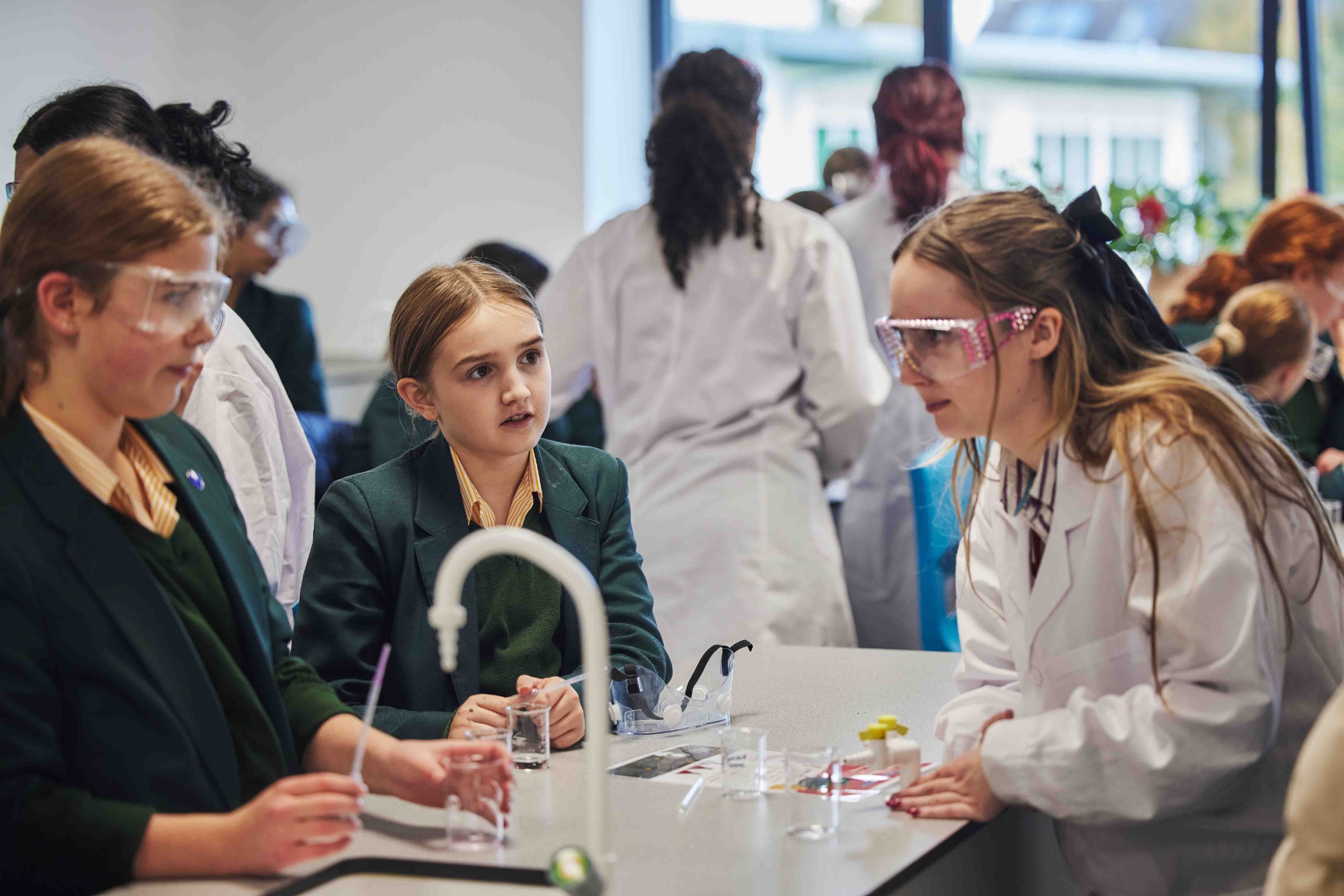
One of the most significant advantages of girls-only education is its impact on STEM subjects. Nationally and internationally, evidence consistently shows that girls in single-sex environments are more likely to engage confidently with mathematics, sciences and computing, to continue these subjects beyond GCSE, and to view them as viable and realistic pathways. In mixed settings, girls can sometimes participate less, speak less and take fewer academic risks in these areas. In girls-only classrooms, those barriers simply do not exist.
As a result, subjects like physics or computer science are not perceived as ‘non-traditional’. They are normal. Girls ask questions, make mistakes publicly, persevere with challenge and develop the intellectual resilience that selective academic pathways demand.
Just as importantly, a girls-only grammar school allows teaching to be intentionally ambitious and responsive. Teachers are specialists not only in their subjects but in how high-ability girls learn. Lessons are designed to promote depth of understanding, precision of language, independence and metacognitive awareness – all of which underpin success at school and beyond.
Beyond Academics
However, academic success is only part of the picture. Parents also want to know what sort of people their daughters will become.
Girls-only schools are particularly strong at developing confidence, leadership and voice. In this environment, girls lead because there are no default alternatives. They fill every leadership role, take responsibility, speak publicly, chair discussion, compete, collaborate and represent their community from a young age.
Over time, this normalises leadership. Girls do not need permission to step forward, and leadership takes many forms – analytical, creative, ethical, collaborative as well as assertive. This breadth is important, because it ensures that girls develop a secure sense of self rather than a narrow performance of confidence.
The culture here is purposeful, inclusive and focused. Without the social pressures that can accompany mixed environments in adolescence, girls are often freer to engage intellectually, to participate authentically and to form strong academic and pastoral relationships. This matters greatly in a selective setting, where challenge must be matched by wellbeing and support.
A question parents often raise is whether girls-only education prepares pupils for the “real world”. It is a reasonable question – and the answer is unequivocal.
Girls educated in single-sex environments go on to universities and workplaces that are mixed, competitive and demanding. The difference is that they arrive there accustomed to speaking up, accustomed to intellectual challenge, and secure in their ability to succeed. Girls-only schools do not shield pupils from the world; they equip them to meet it with confidence and clarity.
Ultimately, a girls-only grammar education is about removing unnecessary barriers. It creates an environment in which academic ability can flourish, ambition can be openly expressed, and leadership becomes routine rather than exceptional.
For many families, that combination – academic rigour, confidence, and opportunity – is precisely what they are seeking.
As you explore the school today, I encourage you to speak with staff and pupils, observe how learning happens, and consider whether this environment feels right for your daughter. We are proud of the education we offer and delighted to share it with you".
If you'd like to find out more about our school, why not join us for an Open Day? Please visit our Join Us page for more information.