
Ribston Hall High School

History
Key Stage 3
Students follow a balanced curriculum of British and World history with a mixture of depth and breadth. The aim is to develop skills in enquiry, analysis and evaluation whilst fostering enjoyment and engagement. Topics include African Kingdoms, Transatlantic Slave Trade, Local History, the campaign for Female Suffrage, the First World War and the Holocaust.
This is based around the core principles of the National Curriculum, and we seek to go beyond these guidelines by developing the diversity of our offer.
Content
What is History?
Intent: To establish an understanding of the nature of History as a discipline and introduce pupils to the work of historians and the second order concepts.
How can we tell the story of Gloucester?
Intent: To develop a chronological framework of the past and introduce the range of types of evidence historians can use. To engage pupils with the understanding that history is everywhere and that local history connects us with national and international history. To demonstrate the diversity of local history. Second Order concept focus is Evidence.
The Medieval World
Intent: To develop knowledge and understanding of substantive concepts such as government, feudalism, monarchy, and religion. To develop pupils’ knowledge of diverse and global history, and the relationship of Europe to Africa, Asia and the Middle East in this period. To establish understanding of Africa before the transatlantic slave trade and colonialism. To engage pupils with recent historical scholarship.
The (Hi)Story behind the Shows
Intent: To use popular musicals as a starting point for a deeper exploration of a historical event. Students will develop their source skills as well as be introduced to a range of topic areas that will be built upon later in Key Stage 3.
African Kingdoms, Empire and the Slave Trade
Intent: To gain knowledge and understanding of African history pre- and post-slavery. To explore the causes of slavery; to recognise the chronological history of slavery and how slavery has changed from Roman through to present day.
To start to consider what human rights are and demonstrate an understanding of ‘African’ voices and resistance – through evidence and interpretations.
To demonstrate knowledge through discussion and debate.
To evaluate the legacy of slavery in present day; making local connections to Gloucester and the surrounding area.
The First World War
Intent: To understand chronological events of WW1 and the nature of global conflict, through sources and scholarship. To evaluate the social impacts of war in 20th Century Britain. To analyse the contribution of the Empire's war efforts and to develop pupils’ knowledge of diverse and global history.
Migration to the UK
Intent: To continue to develop knowledge of local and global history and the idea of migration. To engage with historical debate and a range of evidence to consider the impact and influence of migration. To develop substantive concepts and deepen critical written skills. To develop second order concept skills such as causation, significance, and evidence.
Why do we live in a democracy? Radicalism and Reform
Intent: To develop a chronological understanding of why we live in a democracy through a range of sources and historical interpretation. To engage and empower pupils to evaluate the significance of individual protest and consider what human rights are. To understand the significance of events which contribute to democracy in the 21st Century.
The Holocaust How, and why did the Nazis deny people their human rights?
Intent: To develop chronological knowledge of the Holocaust and explore the Jewish identity in Europe Pre-1930’s and after Hitler’s rise to power. To analyse and explore the idea of race, racist ideology, and its consequences. Pupils will gain the knowledge necessary to develop second-order skills, such as source work, whilst developing a deeper understanding of the Holocaust and human rights.
The fight for Civil Rights for Black Americans
Intent: Pupils will gain a broad understanding of significant events which relate to the fight for civil rights for Black Americans. They will learn how to analyse and form a judgement on key individuals and legislation and be able to make crucial links between the situation throughout the 50’s and 60’s and present day.
What was it like to be part of a marginalised group in Britain 1948-2020? (a work in progress)
Intent: Pupils will explore marginalised groups in Britain; this directly links to prior knowledge of Human Rights. They will develop knowledge of different groups of people and engage with historical events to make connections between the past and present. They will enhance their knowledge of human rights in Britain and develop a range of second order concept skills; significance, interpretation, similarity and difference (between marginalised groups) and sources.
Key Stage 4
Exam Board
Edexcel GCSE History
Description
Content taught over 5 lessons per fortnight. Lesson resources include text books, journals and documentaries.
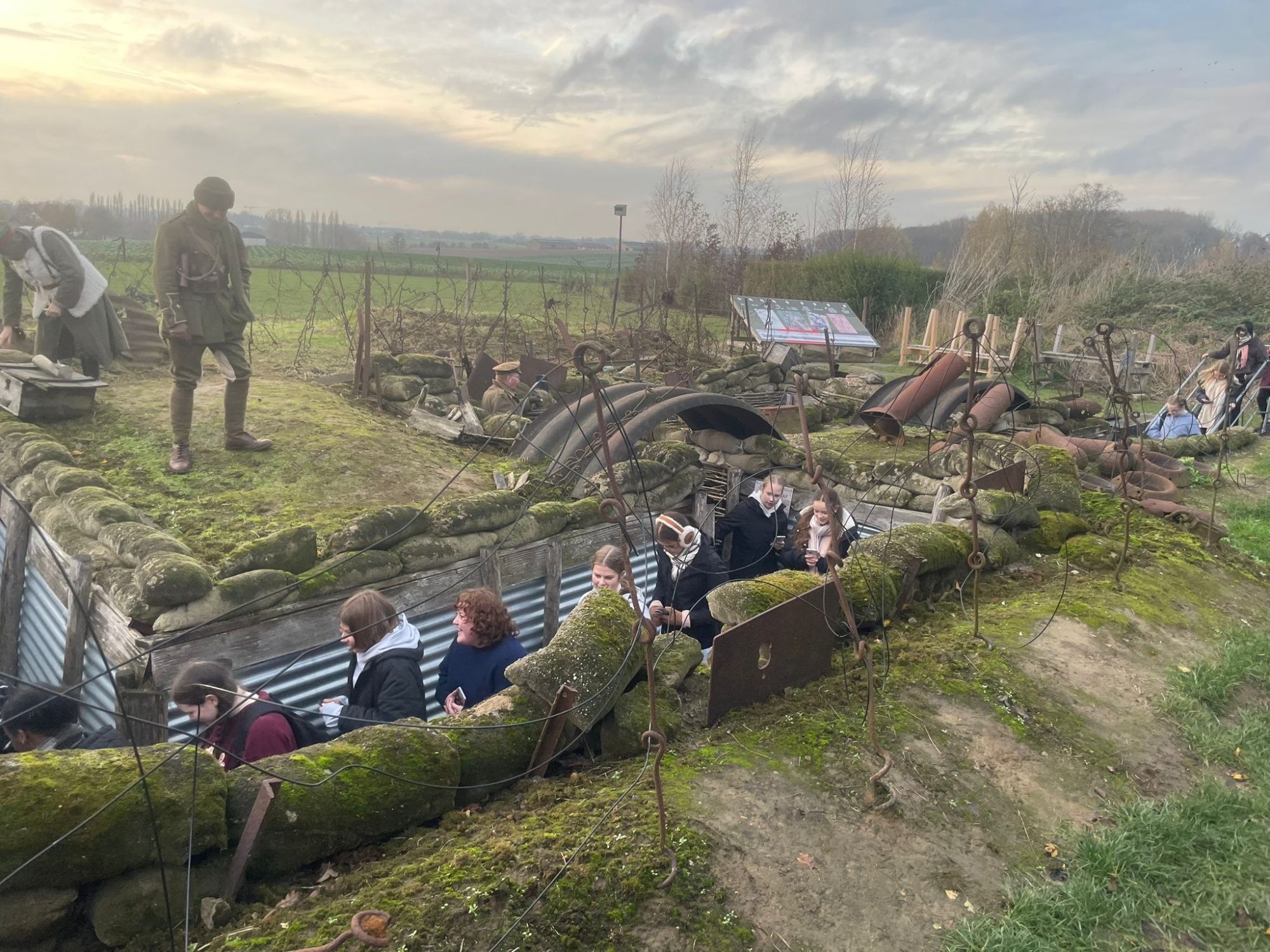
Students have access to a large History section in the school library. GCSE students have had the opportunity to visit Berlin on an overseas visit.
Content
Paper 1: Thematic study of the historical environment – Crime and punishment in Britain, c1000–present, with Whitechapel, c1870-c1900: crime, policing and the inner city.
Paper 2: Period study and British depth study – Superpower relations and the Cold War, 1941–91 and Early Elizabethan England, 1558 – 1588.
Paper 3: Modern depth study – Weimar and Nazi Germany, 1918–39.
Key Stage 5
Exam Board
Edexcel Route H (Paper 1 & 2) Option 34.2 (Paper 3)
Description
Lessons are taught by 2 subject specialists using a range of resources. These include books written by historians, documentaries, artefacts and journal articles. Students are expected to engage in wider reading and participate in class discussions. There are numerous opportunities for students to analyse the work of historians.
Content
Year 12:
Paper 1: Britain Transformed, 1918–97; including the changing role of gender, 1960s counterculture, race relations and the creation of the NHS
Paper 2: The USA, 1955–92: conformity and challenge; covering political, economic and cultural change in post-war America
Year 13:
Paper 3: Poverty, public health and the state in Britain, c1780–1939; covering the cholera outbreak, industrial change and the Great Depression
Coursework: Independent research project with a focus on the work of historical interpretations
Extra-curricular Opportunities
- Visiting speakers (historians) and overseas trip opportunities.
- Visit to Gloucestershire Archives to engage with original documents and participate in workshops.
- Visit to Gloucester History Festival.
- Monthly History Society in school.
Please visit our Extra-curricular Activities page for more information.
Useful Information and Resources
Ribston on the Radio
In July, our Curriculum Lead for Humanities, Mrs Derbyshire, joined Jo Durrant on BBC Radio Gloucestershire to explore our engaging History curriculum and the important role Gloucester has played in shaping local history, heritage, and community identity. Mrs Derbyshire also reflected on the impact of our school becoming the only secondary school in the country to be awarded Champion Heritage School status, and what this prestigious recognition means for our students. You can catch up online here: www.bbc.co.uk/sounds/play/p0nwc7tz
Historically Speaking Podcast
If you're interested in history, check out our 'Historically Speaking' podcast. Created by our A-Level History students, you can find the podcast on Spotify by visiting the following link: Our History.
Ribbus Magazine
Since its first edition in 1925, The Ribbus has documented the achievements and milestones of Ribston each year. Over the decades, it has become a cherished record of our school’s history and a celebration of student life. After a brief hiatus with the rise of digital media, the magazine was revived online, reconnecting past traditions with a modern format. You can download and read previous editions, including our Centenary edition, on our Ribbus Magazine page.
Heritage Champions
In 2025, Ribston was awarded Champion Heritage School status by Historic England, to recognise the work we do in promoting and celebrating local history. Ribston is the only secondary school in the country with this accolade.

We were awarded a grant of £2,000 to continue developing our offer and have decided to focus initially on the history of our school (you can’t get much more local than that!). We have appointed a group of Heritage Champions who created the centenary edition of The Ribbus Magazine, and are cataloguing some items from our school archive. You can find out more on our, Our History page.